Kind of odd, but I've been getting more press releases lately for the blogs. Here's one worth printing:
The Obsidians outdoors club has announced a schedule of 22 hikes for visitors to this summer’s U.S. Olympic Track & Field Trials and concurrent Oregon Bach Festival. Outings include 12 coastal, forest and mountain hikes and 10 urban hikes, presenting visitors an introduction to both the natural wonders of western Oregon and the unique attractions of Track Town, USA.
The trials will run from June 27 through July 6, with a two-day break in action on July 1 and 2. The Oregon Bach Festival runs from June 27 through July 13. Most hikes will be easy to moderate, in the five to six-mile range.
The full schedule is available along with additional information and registration procedures on the Obsidians website. All sign-ups will be done online using a unique registration system designed by the Obsidians just for this project.
All hikes will be led by experienced men and women familiar with the areas. There will be a $5 nonmember fee per person (minors under 18 free, with parents) with a suggested sharing of driving costs.
Showing posts with label hiking. Show all posts
Showing posts with label hiking. Show all posts
Thursday, January 17, 2008

Thursday, January 10, 2008
Winter madness: Circumnavigating Crater Lake

Snowshoeing or Cross Country Skiing Crater Lake has been on my Oregon to-do list for about a year. So I was pretty excited when Bill Sullivan outlined the trip in the Register-Guard this week. He made it clear that this trip is not for the faint of heart and better attempted in the early spring to avoid storms. Speaking of which, the road to Crater Lake was recently closed due to an avalanche.
Saturday, January 05, 2008
Toxic fungus continues to spread in Oregon

Cryptococcus gattii, a microscopic pathogen normally found in tropical and subtropical locales in Australia, Africa, India or South America is popping up in the Pacific Northwest. It was discovered in British Columbia in 2001, and recently sickened a woman in Junction City, Oregon the Register-Guard reported last week.
The article quoted associate professor of environmental health at the University of British Columbia: One theory suggests that the microscopic, yeastlike fungus only recently arrived in the Northwest from the tropics, where it’s long been established... Perhaps it stowed away on a tropical plant imported to Canada or was carried by migrating birds.
A competing theory holds that the fungus has been here for a long time, unnoticed until changes in climate or land use patterns allowed it to grow in high enough concentrations that it became airborne and available for causing disease in humans and animals.
Scary thoughts for hikers in Oregon and the Pac NW in general. Talk about the dangers of climate change! The University of British Columbia has been researching the spread of the fungus.
The photo (from a 2007 article in the Globe and Mail) shows the lung x-rays of a fungus victim from British Columbia.
Thursday, December 20, 2007
Looters boost fossils from John Day Monument
Seattle-PI says looters are stealing fossils from the John Day Fossil Beds. From the article:
In the fossil beds, there are places where scientists have taken pictures of fossils on the ground and come back later to find them gone, said Ted Fremd, chief paleontologist at the monument. And there are other places where people have dug pits or tried to remove bones but did a messy job of it, he said.

We saw traces of similar activity at the Clarno unit on our Central Oregon Roadtrip earlier this fall.
In the fossil beds, there are places where scientists have taken pictures of fossils on the ground and come back later to find them gone, said Ted Fremd, chief paleontologist at the monument. And there are other places where people have dug pits or tried to remove bones but did a messy job of it, he said.
We saw traces of similar activity at the Clarno unit on our Central Oregon Roadtrip earlier this fall.
Monday, December 03, 2007
Steens Little Blitzen makes BLM's 10 best hikes in the west
The American Hiking Society named its top ten hikes on BLM land in the West. Thanks to Tom Mangan at Two-Heeled drive for the heads up.
In Oregon, the Little Blitzen Gorge hike in Steens Mountain made the cut.
From the site: This well-maintained trail follows Little Blitzen Creek, in the shadow of the headwall of the 10,000-foot Steens Mountain. There are numerous shady campsites, and thousands of wildflowers cling to the nearly vertical walls of the gorge. Lucky hikers might see elk, and early risers could even catch a glimpse of a mountain lion! The trail itself is well graded and not strenuous, but the remote location and possibility of extreme weather present unique challenges.
Here is a roundup of the five days I spent at Steens Mountain last August.
In Oregon, the Little Blitzen Gorge hike in Steens Mountain made the cut.
From the site: This well-maintained trail follows Little Blitzen Creek, in the shadow of the headwall of the 10,000-foot Steens Mountain. There are numerous shady campsites, and thousands of wildflowers cling to the nearly vertical walls of the gorge. Lucky hikers might see elk, and early risers could even catch a glimpse of a mountain lion! The trail itself is well graded and not strenuous, but the remote location and possibility of extreme weather present unique challenges.
Here is a roundup of the five days I spent at Steens Mountain last August.
Tuesday, November 13, 2007
Authorities scale back search for Oregon professor
The Register-Guard reports: After eight days of combing the dense forests near Cougar Lake, Lane County sheriff’s search and rescue officials called off the active search Monday for Daming Xu, who disappeared Nov. 4 after failing to return home to Eugene from a solo day hike.

There is a site called Find Our Friend dedicated to updates on Daming Xu's situation.

There is a site called Find Our Friend dedicated to updates on Daming Xu's situation.
Sunday, October 21, 2007
Cape Perpetua Sitka Spruce designated Oregon Heritage Tree
Last month the Oregon Travel Information Council designated a giant Sitka Spruce on Cape Perpetua an "Oregon Heritage Tree".

The Salem Statesman Journal wrote up an article last week about the hike and the tree. "The two-mile round-trip hike from the Cape Perpetua visitor center to the Sitka spruce is a great winter walk, even if it's raining sideways, because it's in a protected canyon along a gurgling creek through a carpet of ferns and mosses."
It's not the biggest Sitka Spruce though. The biggest is in Klootchy Creek Park and was damaged in the 2006 storms. The heritage tree program is taking donations to help save the tree.
The Salem Statesman Journal wrote up an article last week about the hike and the tree. "The two-mile round-trip hike from the Cape Perpetua visitor center to the Sitka spruce is a great winter walk, even if it's raining sideways, because it's in a protected canyon along a gurgling creek through a carpet of ferns and mosses."
It's not the biggest Sitka Spruce though. The biggest is in Klootchy Creek Park and was damaged in the 2006 storms. The heritage tree program is taking donations to help save the tree.
Wednesday, April 04, 2007
Indian Mary Peak hike on the Rogue River
Last weekend KP and I did the Indian Mary Peak hike above the Rogue River, just west of the town of Merlin. We paid the $2 day use fee at the Indian Mary park and crossed the street to the trailhead. The sign at the trailhead said it was supposed to only be a mile one way to the summit (1200 feet climb) and I just can’t believe that. It might have been the two winery tours and two nights of limited sleep beforehand, but that hike up seemed really long.
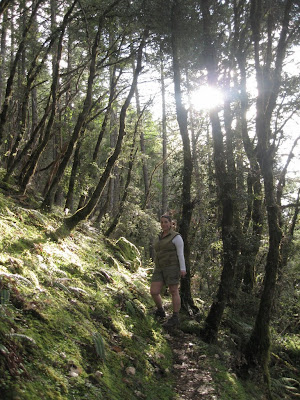
Luckily it was one of the most primordial, awe inspiring hikes I’ve ever taken. The mandrone trees were thicker and more numerous than I’d ever seen before. I replaced my trusty hiking stick (broken trying to scare imaginary bears) with a nice straight mandrone stick and used it to hoist myself up the hill. The sparser, deciduous dominated forest looked different from anything I’d ever seen on the Coast Range so far.
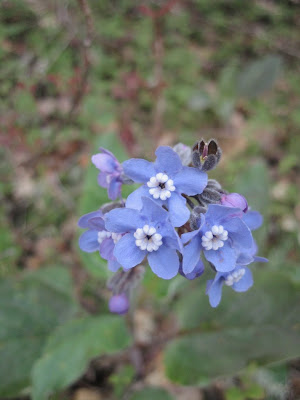
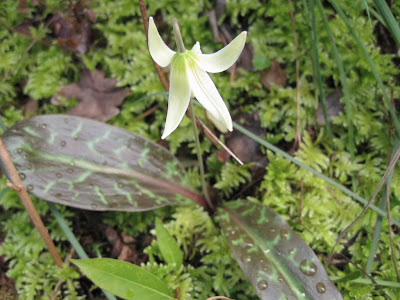
I took pictures of amazing flowers I haven’t been able to identify. I think this one is a glacier lilly. No idea what the other was.
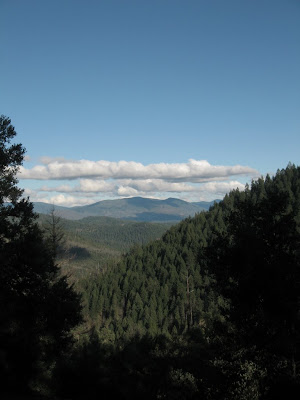
A large group of owls was making noise, like a thrumming, near the top of the peak. It was really cool. Sadly, that was the coolest thing about the top of Indian Mary Peak. There is no view. I repeat. No view. What you see below is at the halfway point in the trail.
 |
| From MattStansberry |
Luckily it was one of the most primordial, awe inspiring hikes I’ve ever taken. The mandrone trees were thicker and more numerous than I’d ever seen before. I replaced my trusty hiking stick (broken trying to scare imaginary bears) with a nice straight mandrone stick and used it to hoist myself up the hill. The sparser, deciduous dominated forest looked different from anything I’d ever seen on the Coast Range so far.
 |
| From MattStansberry |
I took pictures of amazing flowers I haven’t been able to identify. I think this one is a glacier lilly. No idea what the other was.
 |
| From MattStansberry |
A large group of owls was making noise, like a thrumming, near the top of the peak. It was really cool. Sadly, that was the coolest thing about the top of Indian Mary Peak. There is no view. I repeat. No view. What you see below is at the halfway point in the trail.
 |
| From MattStansberry |
Monday, March 26, 2007
Takelma Gorge: Hiking the Upper Rogue River
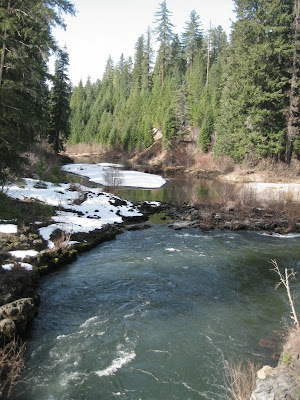
After breaking camp Friday morning, KP and I drove east up highway 62 toward the Upper Rogue to hike River Bridge Campground to Takelma Gorge. At the higher elevation there wasn't much to see in the way of spring plants -- not like the Coast Range, which is exploding with flowers and bugs. Instead, the southern Cascades are full of elk and deer -- presumably bear and cougar as well.
At the beginning of the trail I donned my Osprey Atmos 65 pack and new Montrail Torre boots in order to keep the gear test going. I can say that the boots felt a lot better on this trip and I really appreciated the support around the ankles. I felt more in control of my feet too -- getting used to the extra weight. The pack felt about the same -- like it wasn't even there. I did feel a shift in the pack weight when I put myself into some weird positions and that worried me a little.
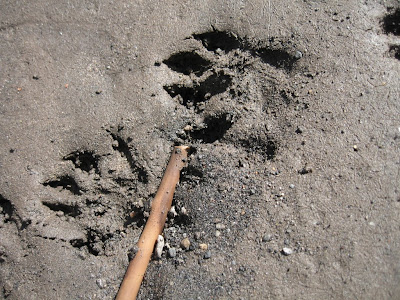
There was a lot of snow on the trail, but no other human footprints. It seemed like no one had been there in weeks. We did find some otter tracks along the riverbank. Elk and deer scat were everywhere, I mean you couldn't even avoid stepping in it. We also jumped a grouse and I instinctively pulled my walking stick up like a shotgun.
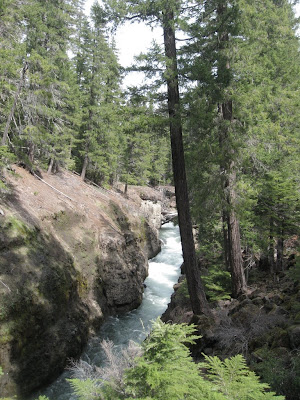
I was thinking a lot about bears coming out of hibernation on this trip -- lumbering hungry boars coming out of hibernation and willing to fight for red meat, or worse a mama with cubs. We were walking through these marshy patches of whippy shrubs that seemed like the perfect bear maze. I thought of Timothy Treadwell. Some big mammals were milling around in the shadows outside of our range of vision, but they could have been anything. There was enough elk shit to build a house out of the stuff -- so it almost had to be an elk. But we never heard or felt the tell-tale elk stomp.
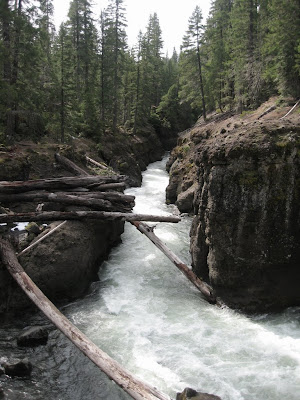
We stopped at Takelma Gorge for lunch and worried a little more about bears and the smell of our trail mix. We busted ass back to the car, and I actually broke my trusty walking stick whacking on trees on the way back to make noise through the bear maze. Funny, they say you're supposed to talk loudly so you don't startle a big predator. But we just clammed up, so I started hitting stuff. All we managed to spook, as far as I could tell, was a group of four wood ducks which I would have liked to have had a better look at.
 |
| From MattStansberry |
At the beginning of the trail I donned my Osprey Atmos 65 pack and new Montrail Torre boots in order to keep the gear test going. I can say that the boots felt a lot better on this trip and I really appreciated the support around the ankles. I felt more in control of my feet too -- getting used to the extra weight. The pack felt about the same -- like it wasn't even there. I did feel a shift in the pack weight when I put myself into some weird positions and that worried me a little.
 |
| From MattStansberry |
There was a lot of snow on the trail, but no other human footprints. It seemed like no one had been there in weeks. We did find some otter tracks along the riverbank. Elk and deer scat were everywhere, I mean you couldn't even avoid stepping in it. We also jumped a grouse and I instinctively pulled my walking stick up like a shotgun.
 |
| From MattStansberry |
I was thinking a lot about bears coming out of hibernation on this trip -- lumbering hungry boars coming out of hibernation and willing to fight for red meat, or worse a mama with cubs. We were walking through these marshy patches of whippy shrubs that seemed like the perfect bear maze. I thought of Timothy Treadwell. Some big mammals were milling around in the shadows outside of our range of vision, but they could have been anything. There was enough elk shit to build a house out of the stuff -- so it almost had to be an elk. But we never heard or felt the tell-tale elk stomp.
 |
| From MattStansberry |
We stopped at Takelma Gorge for lunch and worried a little more about bears and the smell of our trail mix. We busted ass back to the car, and I actually broke my trusty walking stick whacking on trees on the way back to make noise through the bear maze. Funny, they say you're supposed to talk loudly so you don't startle a big predator. But we just clammed up, so I started hitting stuff. All we managed to spook, as far as I could tell, was a group of four wood ducks which I would have liked to have had a better look at.
Thursday, March 22, 2007
Montrail Torre GTX hiking boots review
Montrail Torre GTX hiking boots: This week I bought a pair of full on hiking boots at REI to replace my Garmonts that are worn out. I was going to try to resole my old hiking boots, but I couldn't because they use plastics and foam in the soles to lighten them up. It makes them impossible to replace the Vibram.

I wasn't totally sure I wanted a new hiking boot. I'd read Lightweight Backpacking and Camping a while back and I liked the premise that a full Gore-Tex, leather upper hiking boot wasn't the way to go. According to the book, a short, lighter trail shoe with SuperFeet is a whole lot easier on your legs -- you lose a little support, but you don't put your feet in all the goofy positions that get ankles twisted anyway. And I've got a pair of Merrell trail shoes to prove it.
But I thought I'd give the big boys another shot and I had a dividend and 20% coupon to blow. I got a dual reccomendation from each of the shops I went to -- shoe guys like the Montrails. I had to get wide shoes, size 10.
I wore them today for the first time and found them heavy, clunky and stiff. New boots basically. The main complaint is that the super-stiff soles are like wearing a pair of roller skates. I fell down about three times. We were at Alsea Falls and I just about went down them headfirst. Stay away from streambeds with these things.
Ask me again in a couple weeks. I'm going to keep wearing them and let you know if they get any better. On the other hand, this review is pretty good. And these Montrail Torre GTX reviews are really good too. I found this last review to be the most thorough from BackpackGearTest.org. This reviewer liked the boots a lot but found the same problem with grip.
I wasn't totally sure I wanted a new hiking boot. I'd read Lightweight Backpacking and Camping a while back and I liked the premise that a full Gore-Tex, leather upper hiking boot wasn't the way to go. According to the book, a short, lighter trail shoe with SuperFeet is a whole lot easier on your legs -- you lose a little support, but you don't put your feet in all the goofy positions that get ankles twisted anyway. And I've got a pair of Merrell trail shoes to prove it.
But I thought I'd give the big boys another shot and I had a dividend and 20% coupon to blow. I got a dual reccomendation from each of the shops I went to -- shoe guys like the Montrails. I had to get wide shoes, size 10.
I wore them today for the first time and found them heavy, clunky and stiff. New boots basically. The main complaint is that the super-stiff soles are like wearing a pair of roller skates. I fell down about three times. We were at Alsea Falls and I just about went down them headfirst. Stay away from streambeds with these things.
Ask me again in a couple weeks. I'm going to keep wearing them and let you know if they get any better. On the other hand, this review is pretty good. And these Montrail Torre GTX reviews are really good too. I found this last review to be the most thorough from BackpackGearTest.org. This reviewer liked the boots a lot but found the same problem with grip.
Tuesday, March 20, 2007
Kentucky Falls, Siuslaw National Forest hike
Last weekend, Alex, KP and I drove out to Kentucky Falls in Oregon's Coast Range. KP and I had tried to get out there a few weeks ago and the roads were so bad that we'd had to turn around. This time wasn't much better, but we did make it past rockslides, downed trees and ice.
Despite the obstacles, the Kentucky Falls trailhead was absolutely packed. There are three major falls on the 2-mile trail; elevation loss is about 800 feet on the way down and it happens all at once.
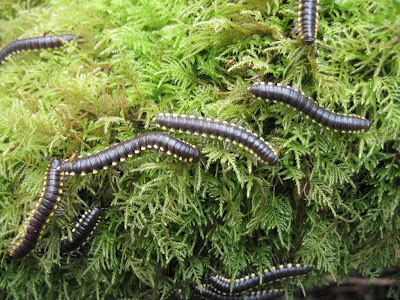
The hike/falls were pretty great, but the Pacific Northwest invertebrate safari made it an amazing trip. For starters, there was a millipede orgy going on -- mating, feeding, who knows? But the Yellow-spotted millipede were everywhere. For more info on this poisonous creeper, check out this Yellow-spotted millipede links from NaturePark, WikiPedia and Olympic National Park site, which calls them the Almond-scented millipede.
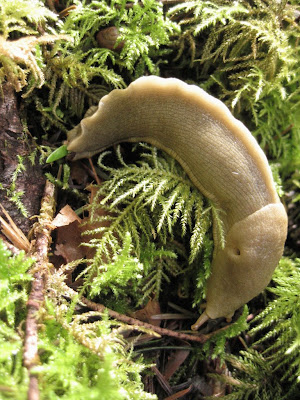
We also found a banana slug, the second largest slug in the world. It's the first one I've seen this year.
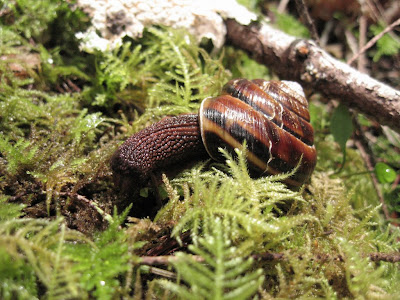
Lastly, we came across a giant Oregon Forestsnail.
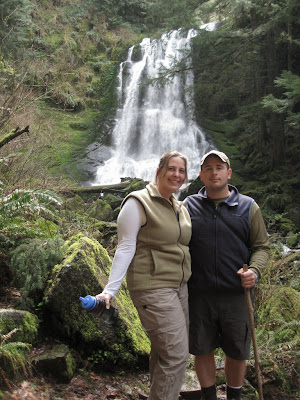
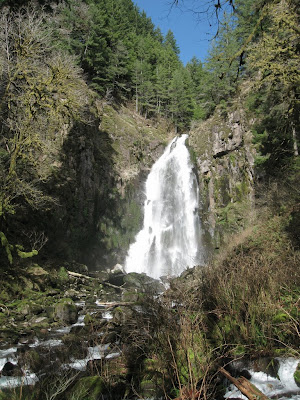
Here is a picture of lower Kentucky Falls:
 |
| From MattStansberry |
Despite the obstacles, the Kentucky Falls trailhead was absolutely packed. There are three major falls on the 2-mile trail; elevation loss is about 800 feet on the way down and it happens all at once.
 |
| From MattStansberry |
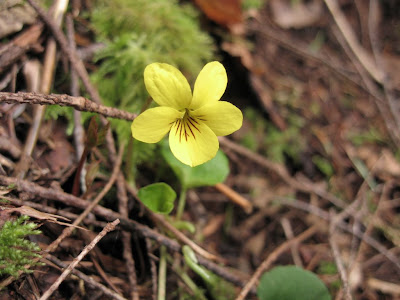
The hike/falls were pretty great, but the Pacific Northwest invertebrate safari made it an amazing trip. For starters, there was a millipede orgy going on -- mating, feeding, who knows? But the Yellow-spotted millipede were everywhere. For more info on this poisonous creeper, check out this Yellow-spotted millipede links from NaturePark, WikiPedia and Olympic National Park site, which calls them the Almond-scented millipede.
 |
| From MattStansberry |
We also found a banana slug, the second largest slug in the world. It's the first one I've seen this year.
 |
| From MattStansberry |
Lastly, we came across a giant Oregon Forestsnail.
 |
| From MattStansberry |
Here is a picture of lower Kentucky Falls:
 |
| From MattStansberry |
Monday, March 12, 2007
Parker Falls trail photos
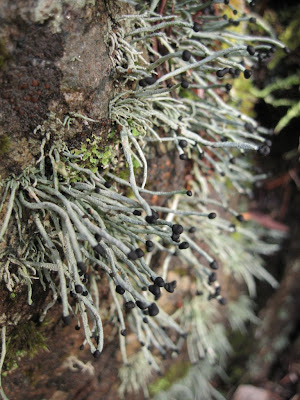
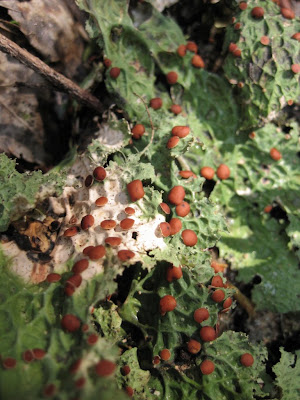
Yesterday KP and I headed up to Brice Creek to scout some fishing spots and do some hiking. We came across a trailhead for Parker Falls, so we went for it. Found some nice photo opportunities, good weather. I wouldn't hold out for the fishing though. I drifted some small nymphs through slower pools off the main rush of Brice Creek, but had no takers.
Here is more info on the Parker Falls hike:
Map and info from Umpqua N.F. on Trail #1415 Parker Falls Trail
More trails in that area
Trail review from Call of the Wild photograhpy
Waterfalls of the Pacific Northwest covers Lower Parker Falls and Upper Parker Falls.
 |
| From MattStansberry |
 |
| From MattStansberry |
 |
| From MattStansberry |
Here is more info on the Parker Falls hike:
Thursday, March 08, 2007
McKenzie River trail in Februrary
A couple weeks back, KP and I hiked the McKenzie River trail, upstream from Belknap Springs. It was really gorgeous trip and it got me thinking about where we live and winters here in the Pacific Northwest.

It seems like we spend a lot of days walking through unbelievably verdant green rainforests; green exploding from everywhere-- moss and old mans beard handing from every possible surface. The water is turquoise, glowing, the filtered light coming through the trees. And it’s every weekend -- in February. I just hope we don’t get jaded or used to this.
I had this idea in my head when I moved here, that I’d spend 3 seasons Oregon, and spend the winter somewhere else. But I wouldn’t want to go anywhere else.
This MP3 is the sound of the McKenzie River rushing by. After reocording this we heard this thumping noise. It was giant boulders rolling down the river, shaking the ground we were walking on.

It seems like we spend a lot of days walking through unbelievably verdant green rainforests; green exploding from everywhere-- moss and old mans beard handing from every possible surface. The water is turquoise, glowing, the filtered light coming through the trees. And it’s every weekend -- in February. I just hope we don’t get jaded or used to this.
I had this idea in my head when I moved here, that I’d spend 3 seasons Oregon, and spend the winter somewhere else. But I wouldn’t want to go anywhere else.
This MP3 is the sound of the McKenzie River rushing by. After reocording this we heard this thumping noise. It was giant boulders rolling down the river, shaking the ground we were walking on.
Saturday, March 03, 2007
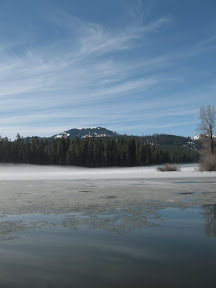
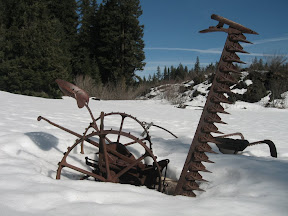
Fish Lake Interpretive Site snowshoeing photos
Fish Lake Interpretive Site: Here are some photos from our snowshoeing excursion in the Oregon Cascades.
 |
| From MattStansberry |
 |
| From MattStansberry |
 |
| From MattStansberry |
Sunday, February 25, 2007
Oregon Cascades Snowshoeing: Highway 242
My buddy Peter Green, chairman of trail maintenance for the Obsidians, sent OOJ these photos from a recent snowshoeing trip up McKenzie Pass -- Highway 242.
The route was 14 miles round trip from the snow gate on the Sisters side of 242. Peter and his wife Monica camped on Feb 2, woke up the next day, and hiked to the summit of McKenzie Pass in about 3 hours.
They camped out in the Dee Wright Observatory. Peter had never heard of anyone camping in that shelter before, but thought it seemed like a good idea. They actually had to set up the tent inside because it was pretty wet and icy. But it was a great wind block. Lots of mice, so secure your food if you go.
Check out our audio-cast on snowshoeing with Peter Green of the Obsidians: Download MP3.
The route was 14 miles round trip from the snow gate on the Sisters side of 242. Peter and his wife Monica camped on Feb 2, woke up the next day, and hiked to the summit of McKenzie Pass in about 3 hours.
They camped out in the Dee Wright Observatory. Peter had never heard of anyone camping in that shelter before, but thought it seemed like a good idea. They actually had to set up the tent inside because it was pretty wet and icy. But it was a great wind block. Lots of mice, so secure your food if you go.
Check out our audio-cast on snowshoeing with Peter Green of the Obsidians: Download MP3.
Deschutes River February hike
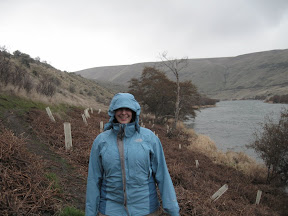
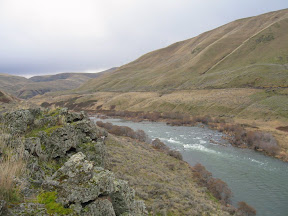
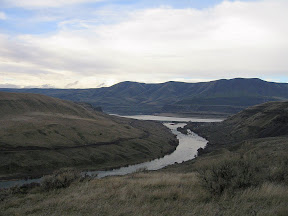
Lower Deschutes River Hike: KP and I headed east today, on our way to Richland, Wash. (on a road trip for the day job). It was our first time through the Columbia River Gorge area. That drive gives you perspective on the lay of the water in our state, passing over the mouth of the Deschutes and the John Day.
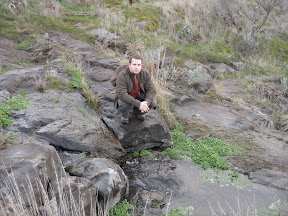
We stopped at the Deschutes River State Recreation Area to do the first hike in Bill Sullivan's hiking guide to Eastern Oregon. It was a 4.2 mile loop, 600 feet elevation gain.
It offered some great photo opportunities, a sense of geography, and a good place to fish.
We stopped at the Deschutes River State Recreation Area to do the first hike in Bill Sullivan's hiking guide to Eastern Oregon. It was a 4.2 mile loop, 600 feet elevation gain.
It offered some great photo opportunities, a sense of geography, and a good place to fish.
 |
| From MattStansberry |
 |
| From MattStansberry |
 |
| From MattStansberry |
 |
| From MattStansberry |
Friday, February 23, 2007
Hunting philosophy evolves on hike
Hiking is good for my brain. It gives me a chance to get my head around ideas that otherwise I'd be too distracted to work out. KP and I were walking the Goodman Creek trail today and I noticed some bobcat tracks. The bobcat was following the trail for a long while and the tracks were really fresh. I think it was following the big flocks of thrushes that were picking gravel off of the trail.

The tracks were so fresh, they were still crumbling inward as we walked along. It had obviously backtracked our trail.
The bobcat got me thinking about predators, and hunting in general. I'm reading Robert Ruark's The Old Man and the Boy right now, and it's written in 1957 and set back a few decades before that. Ruark's boyhood character espouses a lot of interesting conservation ideas and is really ahead of his time in that sense, but one of the things I find interesting is how easy it is for him to go gather various game animals all around the house.
It reminds me of the way I want to hunt -- which is the way that I fish a lot of the time. Casually, taking what comes my way. But that's not really feasible at this point in our relationship with wild animals. The wild animals aren't there. I don't have the private land at my disposal to cultivate a good population of birds and small game to harvest.
Hunting has to be a committment at this point, not a past time like fishing is. I have to be willing to hunt on big game, which is managed intensively by state governments and biologists. I have to understand I might only shoot one bear in my life and it might take five years. Maybe I take a few elk, a deer every other year. And I have to spend a whole week, 4 days, tracking, packing it out on my back, making a committment to that animal and the few that are left.
There just aren't enough animals around to hunt casually anymore. Committment is coming -- bear season this spring.
The tracks were so fresh, they were still crumbling inward as we walked along. It had obviously backtracked our trail.
The bobcat got me thinking about predators, and hunting in general. I'm reading Robert Ruark's The Old Man and the Boy right now, and it's written in 1957 and set back a few decades before that. Ruark's boyhood character espouses a lot of interesting conservation ideas and is really ahead of his time in that sense, but one of the things I find interesting is how easy it is for him to go gather various game animals all around the house.
It reminds me of the way I want to hunt -- which is the way that I fish a lot of the time. Casually, taking what comes my way. But that's not really feasible at this point in our relationship with wild animals. The wild animals aren't there. I don't have the private land at my disposal to cultivate a good population of birds and small game to harvest.
Hunting has to be a committment at this point, not a past time like fishing is. I have to be willing to hunt on big game, which is managed intensively by state governments and biologists. I have to understand I might only shoot one bear in my life and it might take five years. Maybe I take a few elk, a deer every other year. And I have to spend a whole week, 4 days, tracking, packing it out on my back, making a committment to that animal and the few that are left.
There just aren't enough animals around to hunt casually anymore. Committment is coming -- bear season this spring.
Tuesday, February 20, 2007
Oregon Cascades Hot Springs
Last weekend KP and I did a mini-tour of the Oregon Cascades hot springs.
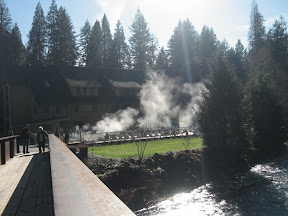
Our hot springs experience started at Belknap Hot Springs, a secluded resort tucked in off of Rte 126. The folks at Belknap charge $10.50 for day use of the springs, guests soak for free. It’s a nice big pool, super clear and nicely heated water (102 degrees). The main pool is located right on the McKenzie and the hot spring bubbles up from the other side of the river. According to Belknap’s Web site, the water comes out of the ground at 200 degrees, full of minerals (mostly sodium, chloride and sulfate). The pool is five feet at its deepest point and not overly crowded, even on weekend mornings or evenings. But, it gets a little boring after a while.
On the other hand, nearby Terwilliger Hot Springs is anything but boring. KP and I drove down there to check it out, just about an hour before dark on Saturday. The parking lot was packed, but the fee collector ($5) had closed up shop for the day, so we got to check it out for free.
There was ample warning that this was a clothing-optional kind of place and KP and I were debating whether to go nude or not. But after hiking back a quarter mile and seeing what we were getting into, we opted to put on the bathing suits.
It was probably the oddest grouping of people I’d ever seen. I’d say it was half young couples and the other half was older hippie guys. Plus, throw in a couple meth-head looking dudes in dirty clothes that looked like they never showered, and the Wolfman.
The Wolfman could have been anywhere between 30 and 60 years old, with a mane of hair and a beard down to his nipples. He spent about half of the time in the hot spring, the other half he spent perched on the cliff above, kind of sitting like a wolf.
To be honest, I found it to be a little too much. Naked attractive women, guys who looked like they would steal everything I own, and a Wolfman. It wasn’t exactly relaxing.
Plus, the water itself made me wonder why we ever left Belknap. I’m all for “natural” experiences and hot springs connoisseurs will make fun of me -- but this was madness. The water couldn’t have been more than 80 degrees. And its consistency was like egg drop soup, with belly button lint floating in it. You can’t tell me something wasn’t living in that muck.
Healing mineral bath anyone? More like hepatitis. But, free is free, so we sat in it for a while, eating oranges with the hippie dudes, trying to figure out how we knew this naked girl sitting next to us.
Well, there you have the two extremes of Oregon Cascades hot springs: Pricey and pretty vs. cheap and gritty.
I do have a few more words on the lodging situation at Belknap Springs. Rooms range at around $100 per night, and if you were smart you’d get a cabin instead. The cabins are more private than the lodge rooms and are half the price. Lodge room beds are pretty lame, the room temperatures are impossible to control and the walls are paper thin. The only thing with the rustic cabins is that you need to bring your own bedding, pillows and towels.
Our hot springs experience started at Belknap Hot Springs, a secluded resort tucked in off of Rte 126. The folks at Belknap charge $10.50 for day use of the springs, guests soak for free. It’s a nice big pool, super clear and nicely heated water (102 degrees). The main pool is located right on the McKenzie and the hot spring bubbles up from the other side of the river. According to Belknap’s Web site, the water comes out of the ground at 200 degrees, full of minerals (mostly sodium, chloride and sulfate). The pool is five feet at its deepest point and not overly crowded, even on weekend mornings or evenings. But, it gets a little boring after a while.
 |
| From MattStansberry |
On the other hand, nearby Terwilliger Hot Springs is anything but boring. KP and I drove down there to check it out, just about an hour before dark on Saturday. The parking lot was packed, but the fee collector ($5) had closed up shop for the day, so we got to check it out for free.
There was ample warning that this was a clothing-optional kind of place and KP and I were debating whether to go nude or not. But after hiking back a quarter mile and seeing what we were getting into, we opted to put on the bathing suits.
It was probably the oddest grouping of people I’d ever seen. I’d say it was half young couples and the other half was older hippie guys. Plus, throw in a couple meth-head looking dudes in dirty clothes that looked like they never showered, and the Wolfman.
The Wolfman could have been anywhere between 30 and 60 years old, with a mane of hair and a beard down to his nipples. He spent about half of the time in the hot spring, the other half he spent perched on the cliff above, kind of sitting like a wolf.
To be honest, I found it to be a little too much. Naked attractive women, guys who looked like they would steal everything I own, and a Wolfman. It wasn’t exactly relaxing.
Plus, the water itself made me wonder why we ever left Belknap. I’m all for “natural” experiences and hot springs connoisseurs will make fun of me -- but this was madness. The water couldn’t have been more than 80 degrees. And its consistency was like egg drop soup, with belly button lint floating in it. You can’t tell me something wasn’t living in that muck.
Healing mineral bath anyone? More like hepatitis. But, free is free, so we sat in it for a while, eating oranges with the hippie dudes, trying to figure out how we knew this naked girl sitting next to us.
Well, there you have the two extremes of Oregon Cascades hot springs: Pricey and pretty vs. cheap and gritty.
I do have a few more words on the lodging situation at Belknap Springs. Rooms range at around $100 per night, and if you were smart you’d get a cabin instead. The cabins are more private than the lodge rooms and are half the price. Lodge room beds are pretty lame, the room temperatures are impossible to control and the walls are paper thin. The only thing with the rustic cabins is that you need to bring your own bedding, pillows and towels.
Monday, February 19, 2007
Snowshoeing in the Cascade Mountains
KP and I set off on Friday for a long weekend of snowshoeing in the Cascade Mountains. Neither of us had ever been snowshoeing before and we didn’t know what to expect. I assumed that the Cascades were impassable through the winter. It’s the main thing that’s been scaring me out of trying to fish eastern Oregon the past month or so. Turns out, I was way off.
Highway 126 didn’t have a drop of snow on it from Eugene to Sisters. The state keeps it pretty well maintained. You can run into issues when there are storms, and that’s why you carry chains in the car, but for the most part it’s pretty simple.
Earlier that day I’d gone through chaining up the practice tire in the Les Schwab showroom three times, concentrating as if my life would depend on it, literally, in the next couple hours.
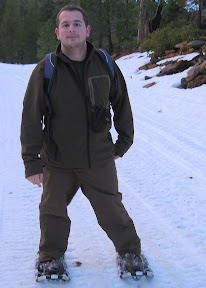
After getting the chain lessons I picked up our Atlas snowshoes from a surly gear manager at REI, Eugene, who didn’t offer a bit of advice or even instruction on the things I was asking about:
Is this a good map of the area?
REI guy: I don’t think the area you’re going to is on there…
It was on there.
What about this snowshoeing book, is it any good?
REI guy: We sell out of it all the time.
It was pretty crappy and confusing.
Any advice on putting these things on?
REI guy: They’re pretty simple
I had them on the wrong feet for at least half of the trip. And I’m still not sure which feet go where.
When we started driving up the Cascades, the sky had opened up and the entire western side of the range was socked in with rain. We checked into our hotel and decided to keep heading east, rather than wait out the rain, and worst case we’d just go to a bar, fly shop, bookstore or something in Sisters, OR.
Just as we were crossing the pass, up around the Metolius River, the sky broke and it was a blue bird day in Sisters. We stopped in at the local fly shop (where I always go for advice, even if it's not about fishing) and the guy sent us out to Three Lake Creek, a Snowpark just south of town.
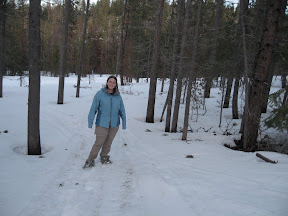
We parked in the Snowpark where some RVs and snowmobiles were set up and started hiking at the snow gate. I didn’t look at the sign on the gate or read the snowshoeing book carefully. If I would have, I’d have known we were attempting a 13 mile roundtrip route with a 1000 foot elevation gain, 90 minutes before dark.
We were a little too scared to get off the rutted snowmobile trails. Broken snowmobile parts littered the snow and you could hear them revving in the background. Also, three jets flew overhead while we were walking, taking away the idea of the snowy wilderness. We must have been on some sort of eastbound flyway. We were not seeing the full beauty of the snowshoe enthusiast’s isolation.
Obviously we didn’t reach the top of the hike, but I kept thinking a viewpoint was around the next corner so we kept pushing. Eventually I tried to do a shortcut to see over the ridge, but all I could see was more trees so we turned back, craving Mexican food in Sisters.
Download an Oregon Outdoor Journal Wilderness-cast MP3 on the Three Creek Lake snowshoeing debacle.
 |
| From MattStansberry |
Highway 126 didn’t have a drop of snow on it from Eugene to Sisters. The state keeps it pretty well maintained. You can run into issues when there are storms, and that’s why you carry chains in the car, but for the most part it’s pretty simple.
Earlier that day I’d gone through chaining up the practice tire in the Les Schwab showroom three times, concentrating as if my life would depend on it, literally, in the next couple hours.
 |
| From MattStansberry |
After getting the chain lessons I picked up our Atlas snowshoes from a surly gear manager at REI, Eugene, who didn’t offer a bit of advice or even instruction on the things I was asking about:
Is this a good map of the area?
REI guy: I don’t think the area you’re going to is on there…
It was on there.
What about this snowshoeing book, is it any good?
REI guy: We sell out of it all the time.
It was pretty crappy and confusing.
Any advice on putting these things on?
REI guy: They’re pretty simple
I had them on the wrong feet for at least half of the trip. And I’m still not sure which feet go where.
When we started driving up the Cascades, the sky had opened up and the entire western side of the range was socked in with rain. We checked into our hotel and decided to keep heading east, rather than wait out the rain, and worst case we’d just go to a bar, fly shop, bookstore or something in Sisters, OR.
Just as we were crossing the pass, up around the Metolius River, the sky broke and it was a blue bird day in Sisters. We stopped in at the local fly shop (where I always go for advice, even if it's not about fishing) and the guy sent us out to Three Lake Creek, a Snowpark just south of town.
 |
| From MattStansberry |
We parked in the Snowpark where some RVs and snowmobiles were set up and started hiking at the snow gate. I didn’t look at the sign on the gate or read the snowshoeing book carefully. If I would have, I’d have known we were attempting a 13 mile roundtrip route with a 1000 foot elevation gain, 90 minutes before dark.
We were a little too scared to get off the rutted snowmobile trails. Broken snowmobile parts littered the snow and you could hear them revving in the background. Also, three jets flew overhead while we were walking, taking away the idea of the snowy wilderness. We must have been on some sort of eastbound flyway. We were not seeing the full beauty of the snowshoe enthusiast’s isolation.
Obviously we didn’t reach the top of the hike, but I kept thinking a viewpoint was around the next corner so we kept pushing. Eventually I tried to do a shortcut to see over the ridge, but all I could see was more trees so we turned back, craving Mexican food in Sisters.
Download an Oregon Outdoor Journal Wilderness-cast MP3 on the Three Creek Lake snowshoeing debacle.
Wednesday, February 07, 2007
Goodman Creek hike
Looking for a hike nearby Eugene yesterday I headed south on Willamette Highway 58 to a trailhead near Hardesty Mt. The 2 mile hike back to the waterfall on Goodman Creek Trail would leave me enough time to get back before dark, so I headed out.
I wasn’t expecting much. Looking at Goodman Creek from the road it’s kind of a wasteland, a dirty stump-filled gulley leading to Lookout Reservoir. Plus, starting out on the trail I realized how busy Rte 58 really is. You could hear the traffic for at least the first mile and a half.
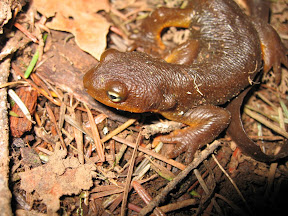
Huge trees were down across the trails and it was pretty slow going at first. Which is lucky because I found an Oregon rough-skinned newt.
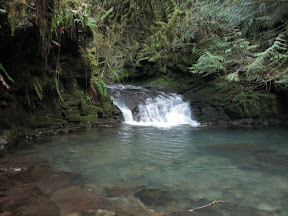
I spotted more wildlife at the end of the line at the falls. There was a little charcoal-black water ouzel singing. It would look at me, sing a few lines, and dips under the water. It sounded like a medley of songs from different birds.
The sound of the bird, the falls, the little grotto -- it reminded me of some sort of cheesy waterfall you’d buy at a landscaping store. The overhanging ferns and moss, the glassy pool in no way seems related to the dusty trickle running to the highway.
 |
| From MattStansberry |
I wasn’t expecting much. Looking at Goodman Creek from the road it’s kind of a wasteland, a dirty stump-filled gulley leading to Lookout Reservoir. Plus, starting out on the trail I realized how busy Rte 58 really is. You could hear the traffic for at least the first mile and a half.
Huge trees were down across the trails and it was pretty slow going at first. Which is lucky because I found an Oregon rough-skinned newt.
 |
| From MattStansberry |
I spotted more wildlife at the end of the line at the falls. There was a little charcoal-black water ouzel singing. It would look at me, sing a few lines, and dips under the water. It sounded like a medley of songs from different birds.
The sound of the bird, the falls, the little grotto -- it reminded me of some sort of cheesy waterfall you’d buy at a landscaping store. The overhanging ferns and moss, the glassy pool in no way seems related to the dusty trickle running to the highway.
Subscribe to:
Posts (Atom)